




 8 minute read

2025 was a solid year for travel. While there was a slight downturn from the record-breaking year of 2024 (affected by global uncertainties, geo political instability and the economic state of households), we saw some fundamental shifts in the way businesses leveraged technology and digital transformation. AI arrived with a seismic bang, it stopped being a future state and became reality.
Looking back at our predictions from years past, we called several trends that have now become standard practice: automation, AI, and machine learning have moved from experimental to essential; and the buy versus build debate has clearly shifted toward integration and collaboration between tech providers. We also predicted the surge in online cruise bookability and the numbers proved us right, with the industry racing to meet CLIA’s target of 4 million new-to-cruise customers.
With a deep dive into the wider Travel industry and our expertise as travel technology providers, here’s what we think will define 2026 for travel businesses.
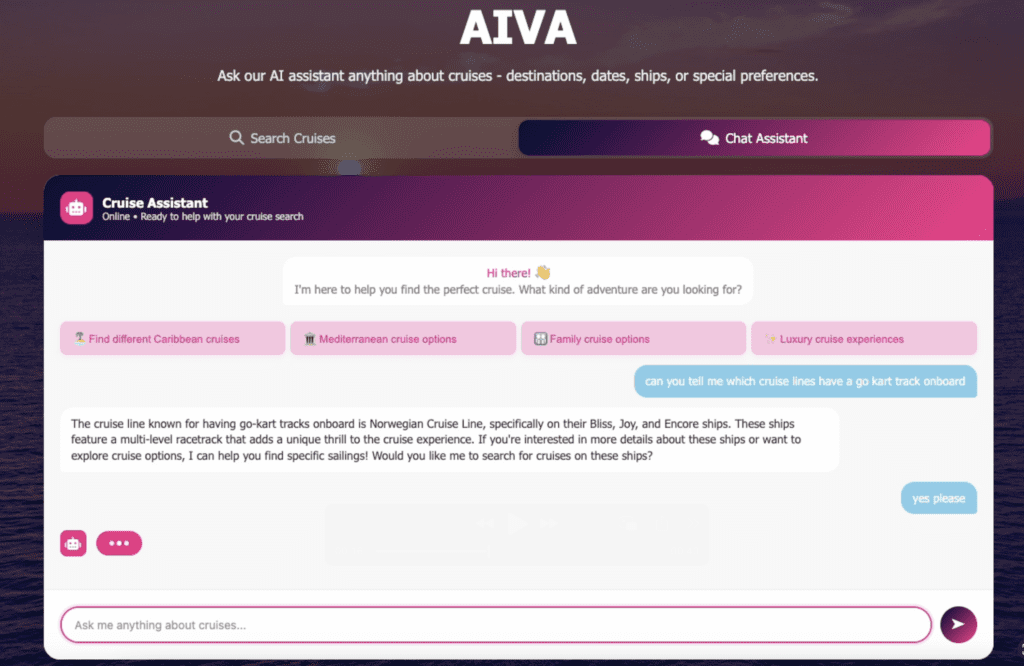
Traveltek’s AIVA AI Cruise Search Feature within iSell Connect
1. AI Moves From Assistant to Orchestrator
AI has been hovering in the background for years, but 2026 is when it takes centre stage as a tool. We’re not just talking about chatbots that answer basic questions. AI is becoming what the industry calls “agentic” multiple systems working together to handle complex travel needs from start to finish.
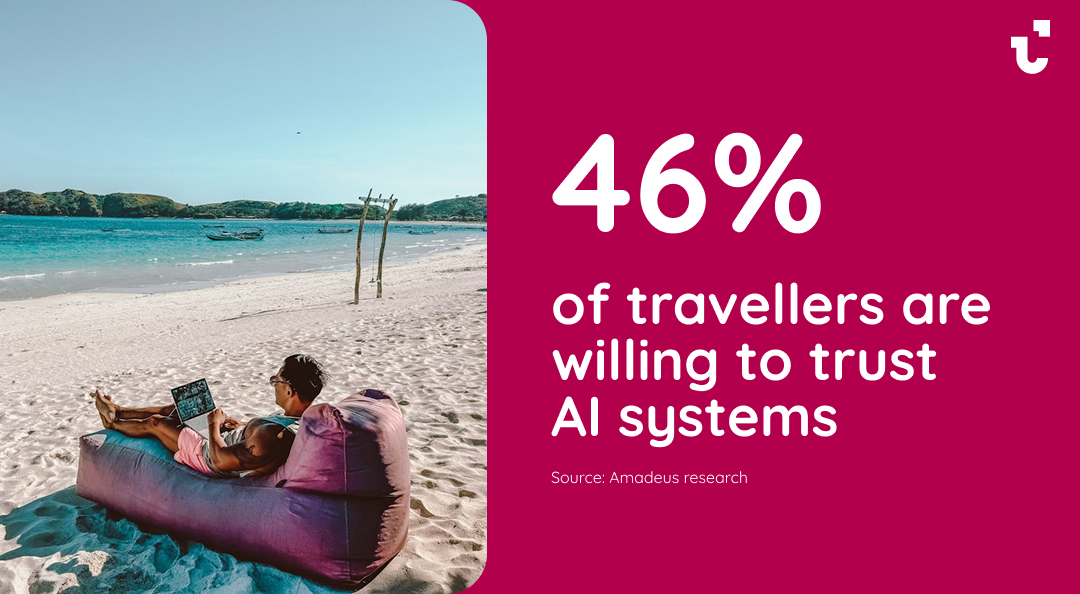
According to Amadeus research, 46% of travellers are willing to trust AI systems for travel bookings. That number is only going up with a 64% year-on year increase in the percentage of global travelers leaning upon generative AI-powered tools.
However, cruise bookings tell a different story. As new-to-cruise passengers increase and demographic shifts drive demand for expedition and luxury cruises, more travellers are seeking travel agents for expertise. Trust and authentic knowledge remain key.
This is where AI becomes your competitive advantage. Tools like Quote Builder and AIVA (Traveltek’s AI search feature) help agents compare hundreds of options using natural language, turning 20-minute searches into 30-second conversations. AI frees your team from repetitive tasks so they can focus on the human part of the job—the exceptional service customers can’t get from ChatGPT, Gemini, or Claude.
The biggest shift comes from systemic AI integration. As our partners at Traverse Automation put it so well “Think of it like this… You as a human, doing what you’re best at, making decisions, being creative, managing people. Your AI teammate, handling the mundane, repetitive stuff like collecting information, making reports, organising tasks, alerting you when something’s wrong.”
2. Unified Platforms Replace Fragmented Systems
Here’s what agents tell us: they’re tired of logging into five different systems to build one holiday. 2026 is the year smoother integrations and less double-typing become reality.
By 2026, 65% of bookings are projected to happen online, and travellers expect seamless experiences. If your booking system feels clunky, they’ll go elsewhere. Dynamic packaging (combining flights, hotels, cruises, and activities in real time from a single platform) is now the baseline expectation.
For your business, this means evaluating whether your tech stack helps or hinders your team. Are your agents switching between systems? Re-entering the same information multiple times? Every extra click is time they’re not spending with customers.
The answer isn’t ripping everything out and starting fresh. It’s choosing technology partners who understand that integrations need to feel seamless. When your team builds a cruise package with pre- and post-cruise hotels and flights, it should flow naturally with pricing that updates in real time.
The cruise industry particularly benefits here. A Mediterranean cruise isn’t just a ship; it’s flights, overnight stays, transfers, maybe a pre-cruise hotel in Barcelona and post-cruise days in Rome. The businesses that can build these packages efficiently will close more bookings.

Photo by Samuel Wong on Unsplash
3. Travellers Are On the Hunt for Experiences and Your Systems Need to Support It
Here’s what the data shows: 84% of travellers say they’ll travel as much or more in 2026 compared to 2025, but they’re being more intentional about their choices. They’re not just booking a destination holiday, they want experiences built around their passions.
Expedia’s research found travellers are building trips around pop culture moments and experiences. Among Gen Z and Millennials, 81% plan getaways based on what they’ve seen on screen, whilst 57% would attend a regional sporting event whilst travelling. Think music festivals, theatre performances, sporting events, cultural celebrations; trips built around experiences, not just destinations.
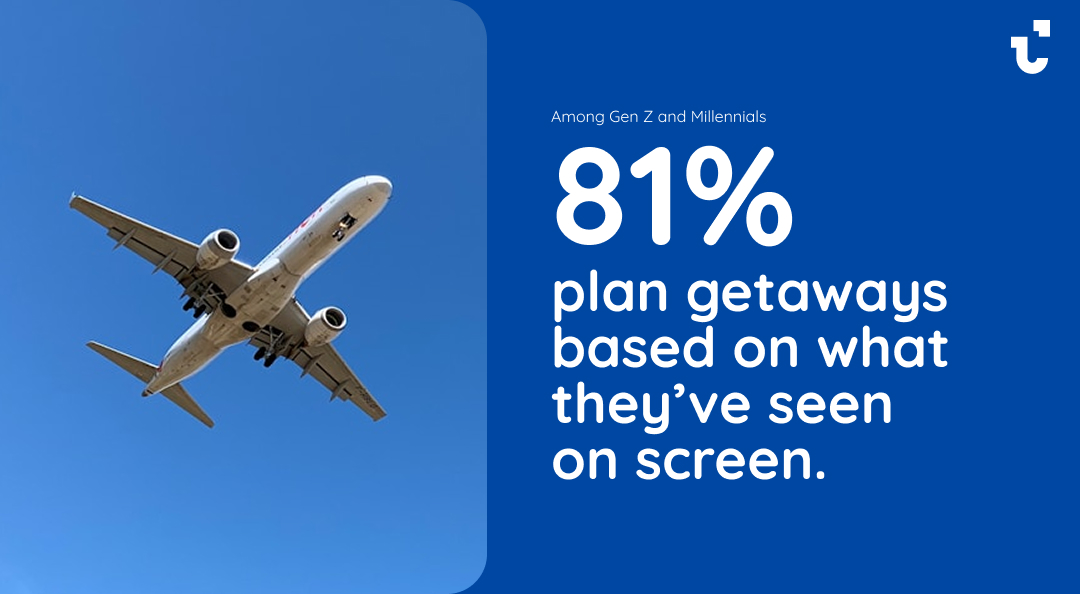
Expedia’s research found that travellers are building trips around personal passions, from on-screen escapes (Among Gen Z and Millennial travellers, 81% now plan their getaways based on what they’ve seen on screen) to unique sporting experiences (57% would attend a regional sporting event whilst travelling).
The cruise industry is embracing this shift brilliantly. Virgin Voyages’ True Crime Voyage, for example, hosts live podcast recordings and workshops at sea, turning a sailing into an immersive experience for true crime enthusiasts. These aren’t just themed cruises, they’re complete experiences designed around specific interests.
For your business, this means your agents need to understand not just “they want a cruise” but “they’re planning their Mediterranean sailing around the Monaco Grand Prix” or “they want that Virgin Voyages True Crime experience with the podcast recordings.”
Your technology needs to support this level of experience-based personalisation. Good systems remember that a customer books around sports events or always adds theatre packages.
Through our partnership with digitaltravel.io we see just how impactful personalisations on websites and apps can be on sales. The systems that surface relevant experiences automatically will drive repeat bookings and customer loyalty.
4. Real-Time Everything Becomes Non-Negotiable
Nobody wants to wait. According to IATA data, 71% of travellers prefer booking online or through mobile apps, and 53% book directly through airline or cruise line websites. They expect instant responses.
For cruise businesses, where cabin availability changes constantly, and pricing is complex, real-time systems aren’t a luxury; they’re essential. Your agents need to know right now whether that mid-ship balcony cabin is available, not get an answer back in an hour when the customer has already booked elsewhere.
This extends beyond the booking moment. Your customers expect real-time updates about itinerary changes, port information, and modifications.
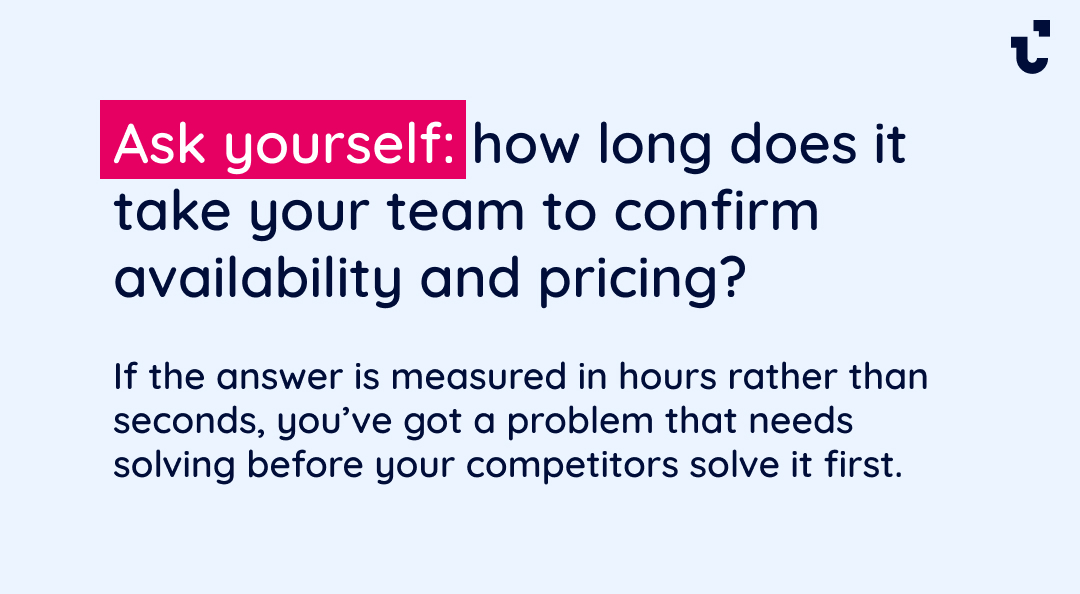
From a business perspective, your technology infrastructure needs to be built for speed. Ask yourself: how long does it take your team to confirm availability and pricing? If the answer is measured in hours rather than seconds, you’ve got a problem that needs solving before your competitors solve it first.
This might mean tough conversations about legacy systems that can’t keep pace, but the cost of not upgrading is lost bookings.

Photo by Anastasiia Nelen on Unsplash
5. Mobile-First Is Now Mobile-Everything
But here’s where apps become game-changers: they create loyalty in ways websites can’t. Mobile app notifications have significantly higher click-through rates than emails; travellers are far more likely to engage with a push notification about a last-minute cabin deal or itinerary change than they are to open yet another email. Apps keep your business front and centre on customers’ devices, making rebooking and repeat purchases effortless.
Think about how your team actually works. They’re on the phone with a customer and need to do a quick lookup. They’re at a trade show showing options on their tablet. They’re working from home and switching between devices. Every feature needs to work everywhere.
This doesn’t mean desktop disappears. Complex bookings still benefit from larger screens. But mobile can’t be an afterthought. If your agents can’t quickly check availability, pull up booking history, or process a modification from their phone, they’re working with one hand tied behind their back.
Cruise sales particularly benefit from mobile-optimised systems and apps. Sales often happen over multiple conversations, with information shared via WhatsApp or email between discussions. Your team needs tools that fit this workflow, whilst customers need apps that make managing their bookings and receiving updates seamless.
What This Means for Your Business
These trends point in one direction: technology should make selling travel easier, not harder. The best tools in 2026 will be the ones your team doesn’t have to think about. They just work, surfacing the right information at exactly the right time.
For travel businesses evaluating their technology in 2026, the questions to ask are straightforward:
- Does your current system free your team to focus on customers, or bog them down in admin?
- Can your agents build complex packages without switching between multiple platforms?
- Does your technology remember customer preferences and relevant experiences?
- Can your systems deliver real-time availability and pricing?
- Does everything your team needs work just as well on mobile as desktop?
At Traveltek, we’ve spent more than 25 years building systems that travel businesses actually want to use. As we head into 2026, we’re focused on making sure our platforms evolve with these trends whilst staying grounded in what really matters: helping your business sell more travel with less hassle.
The travel landscape is changing fast. The businesses that thrive will be the ones whose technology keeps up.
Want to see how Traveltek can help your business prepare for 2026? Get in touch with our team to discuss your technology needs.




